
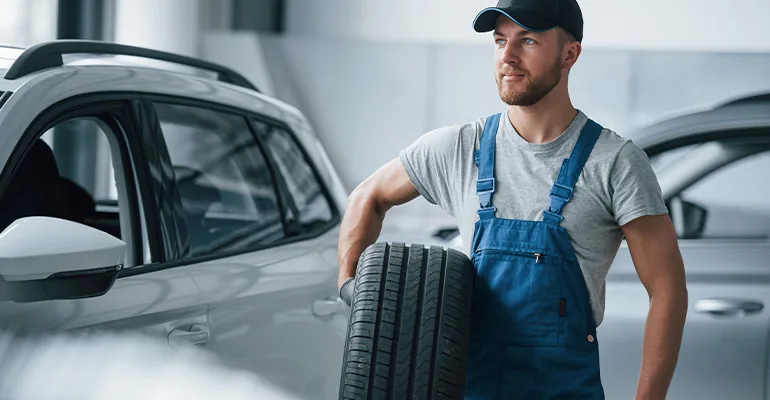
Abu Dhabi Police’s June 2026 “Safe Summer” guidance asks drivers to check tyre pressure and roadworthiness before setting out. That advice matters because extreme heat adds stress to tyres already weakened by age, underinflation, overloading or hidden damage.
The practical response is not to overinflate a tyre “for summer.” It is to use the correct cold pressure, inspect the tyre systematically and deal with defects before the vehicle enters a high-speed road.
The 10-minute summer tyre check
1. Read pressure when the tyres are cold
Use the recommended PSI or kPa on the driver-door placard or in the owner’s manual. The larger number on the tyre sidewall is a maximum rating, not the normal target for your vehicle. Check the spare as well.
2. Look across the full tread width
Check the inner shoulder, centre and outer shoulder. Uneven wear can indicate pressure, alignment or suspension problems. If the wear bars are level with the tread, replacement is due.
3. Inspect both sidewalls
Stop using a tyre with a bulge, exposed cord, deep cut or serious cracking. A bulge can indicate damaged internal cords and should not be treated as a cosmetic issue.
4. Check tyre age
Find the four-digit date code on the sidewall. “2324,” for example, means the tyre was manufactured in week 23 of 2024. Age is only one factor, but Abu Dhabi heat and sunlight make periodic professional inspection especially important.
5. Watch for repeated pressure loss
A tyre that repeatedly needs air may have a puncture, valve leak, bead leak or wheel problem. Refilling it without diagnosis can hide a developing failure.
6. Confirm the load
Do not exceed the vehicle or tyre load limits. Extra passengers, luggage and sustained motorway speed increase heat generation. Check the placard for the correct loaded-vehicle pressure where the manufacturer provides one.
What heat actually changes
Pressure rises as a tyre warms through driving and ambient conditions. That normal rise is why the manufacturer specifies a cold reading. Do not release air from a hot tyre simply because the reading is higher; it may become underinflated when it cools.
Underinflation is particularly risky because the sidewall flexes more and generates additional heat. Overloading, excessive speed, old rubber and existing damage compound the problem.
When to replace instead of repair
A small puncture in the central tread area may be repairable after the tyre is removed and inspected. Sidewall damage, a bulge, exposed cords, run-flat damage after pressure loss, or a puncture outside an approved repair area normally calls for replacement. See our puncture repair guide and service or request a condition check.
Before an Abu Dhabi–Dubai or holiday journey
- Check cold pressure and the spare.
- Inspect tread and sidewalls in daylight.
- Confirm the wheel wrench, jack and emergency equipment are present.
- Investigate vibration, pulling or pressure warnings before departure.
- Save a roadside contact and avoid stopping in a live traffic lane.
For replacement options, visit our Abu Dhabi tyre shop or review mobile tyre service in Abu Dhabi.
Sources and review note
This July 2026 guide was reviewed against Abu Dhabi Police Safe Summer guidance dated 27 June 2026 and NHTSA TireWise maintenance guidance. Vehicle-specific pressure and replacement instructions always take priority.
Frequently Asked Questions
Should I lower tyre pressure because Abu Dhabi weather is hot?
No. Set cold pressure to the vehicle manufacturer’s placard or owner’s manual. Do not guess a lower figure and do not use the maximum pressure moulded on the tyre sidewall as the target.
When should tyre pressure be checked in summer?
Check before driving or after the vehicle has been parked for at least three hours. Recheck monthly, before long trips and after a warning light or suspected impact.
Can a tyre look fine but be unsafe?
Yes. Age, internal impact damage and prolonged underinflation are not always obvious. Ask for a professional inspection if the tyre repeatedly loses pressure, vibrates, has suffered an impact or is several years old.
Does nitrogen prevent tyre blowouts?
No. Nitrogen can reduce pressure loss over time, but it does not prevent punctures, impact damage, overloading or heat damage and it does not replace regular pressure checks.
Need a tyre or alignment check in Abu Dhabi?
Visit Spark Tires in Musaffah M-11 for tyre inspection, computerised alignment, balancing, puncture repair and replacement. Call 056 463 6457 or message us on WhatsApp.